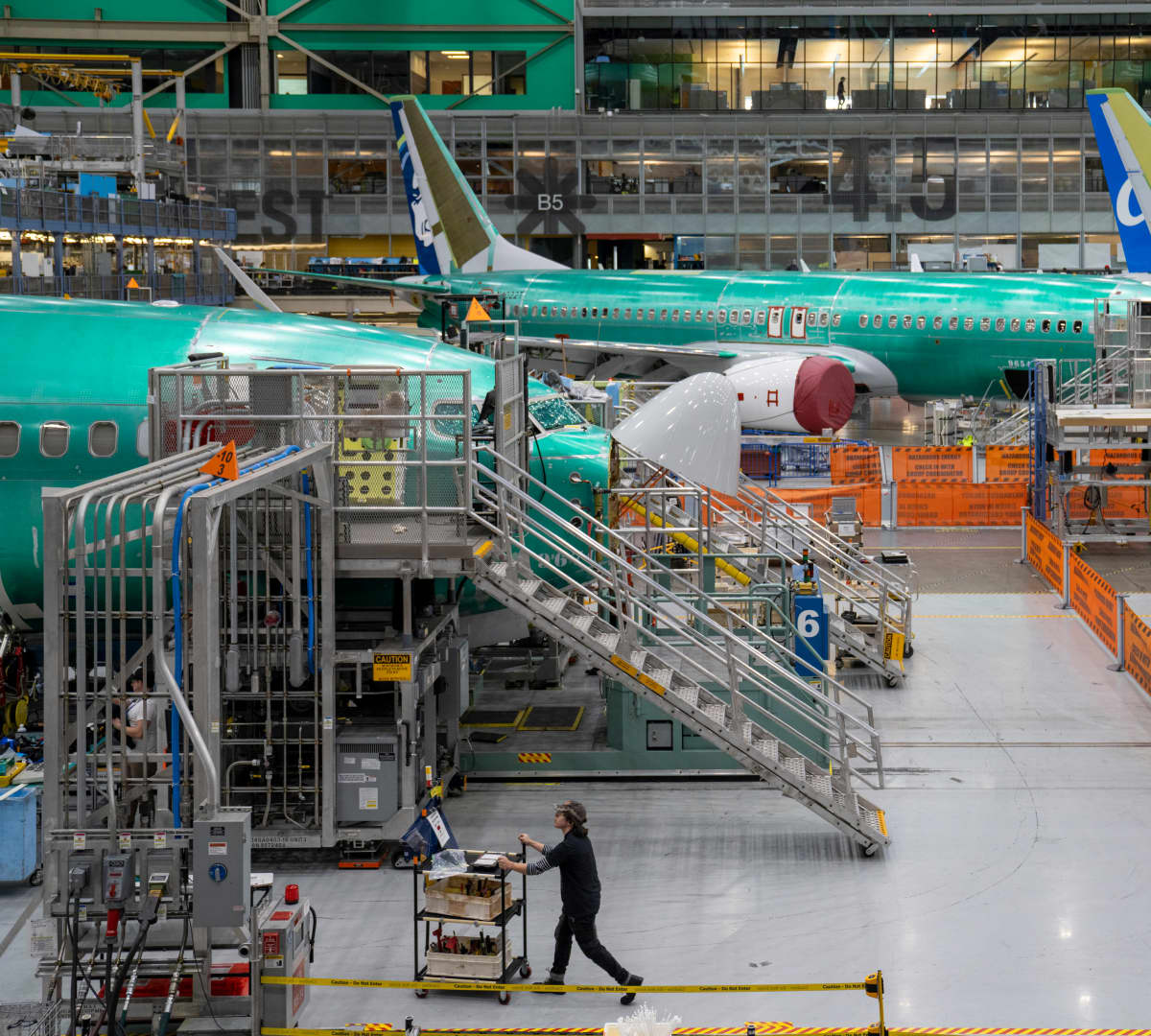
Boeing said Monday it will cut about 5% of its commercial airplane workforce because its production ramp-up is moving more slowly than the company expected. The cuts will come through a combination of attrition and involuntary layoffs, with notifications beginning in December, according to a memo from Stephanie Pope, who runs the commercial aircraft unit. Pope's own words tell the story: the company says it is now "overstaffed" relative to its output, which means the staffing plan was built on a production forecast that did not hold.
That gap matters because the 737 Max is the heart of Boeing's business. Pope said the company is still working to stabilize production rates of the bestselling jet, which is made outside Seattle. CEO Kelly Ortberg told investors last month that the company would not significantly increase Max output until the second half of next year, and he pointed to slower-than-expected wing production as a central problem. Ortberg also said the company has been trying to hold output at about 47 planes a month, while it targets 52 a month in the second half of 2027.
Those numbers deserve a skeptical read. A target set for 2027 is a promise about the future, not a measure of present capability. When a manufacturer has to restate its schedule and then shed workers to match the new schedule, the real question is whether the revised plan is credible this time. The report does not say how many people 5% represents, how the split between attrition and layoffs will fall, or what the cuts will cost Boeing. Those omissions are not minor. They are the details workers and communities would need to judge whether the company is shrinking responsibly or simply absorbing a planning error.
What should happen next is straightforward. Boeing should publish clearer figures on the scope of the reductions and how it will treat affected employees, and it should show investors a production schedule backed by demonstrated supplier and factory performance rather than aspirational milestones. Cutting staff to chase a revised rate is a sign that the earlier rate was never secured. If the 2027 target is real, the company should be able to show the wing supply and assembly progress that justifies it, not just repeat it.